 © dee karen/shutterstock.com
Overview
Climate change is defined by large-scale, long-term shifts in weather patterns and an increase in average temperatures, caused by the accumulation of greenhouse gases in our atmosphere due to human activities. It increases the risk to habitats, biodiversity, freshwater systems and livelihoods. India is among the most climate-vulnerable countries in the world, with impacts being felt across ecosystems and communities.
It is becoming increasingly important to integrate climate resilience, Nature-based Solutions (NbS), and greenhouse gas mitigation strategies into ecosystem management and development planning to minimise the impacts of climate change. These efforts depend on strong scientific assessments, supportive policies, and approaches that place communities and ecosystems at the centre of adaptation.

OUR WORK – CLIMATE & ENERGY
The key work pillars focus on embedding climate resilience in conservation practice, demonstrating pathways for nature-friendly energy transitions in urban and peri-urban areas, strengthening national and global policy engagement; advancing climate education and stakeholder outreach; and supporting financial and institutional systems to enhance climate-informed decision-making. The Climate Change Hub supports communities, children and youth, financial and educational institutions, businesses and government agencies in integrating climate considerations across planning, governance and investment decisions.

KEY PILLARS OF OUR WORK:
WWF-India works to strengthen knowledge and capacity on the links between nature and climate, climate risks and Ecosystem-based Adaptation (EbA) across priority landscapes. EbA actions are integrated into local and landscape-level plans and demonstrated across terrestrial, freshwater, marine and peri-urban systems in key landscapes and river basins. Through on-ground validation, the programme supports scalable models that help communities and ecosystems build long-term climate resilience.
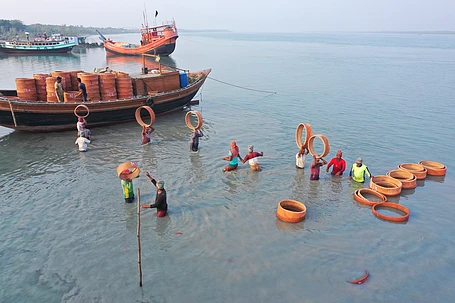
WWF-India works to showcase clean and nature-friendly energy transitions across food systems, water transport and other key livelihood sectors in rural and peri-urban areas. By engaging with communities, local institutions and industry partners, WWF-India promotes scalable models that reduce greenhouse gas emissions, improve resource efficiency and strengthen climate resilience across its priority landscapes.
WWF-India provides technical support to government agencies at global, national, state and local levels to strengthen climate adaptation and resilience planning. The organization works to enhance collaboration across institutions, enabling the broader uptake of EbA and NbS for adaptation to climate change. Through this engagement, WWF-India supports evidence-based decision-making and policies that promote climate-resilient development.
WWF-India strengthens climate education and stakeholder engagement by enhancing climate awareness, especially among children and youth, across its priority landscapes. The organization promotes informed citizen action through accessible outreach initiatives that build understanding of climate risks and solutions. It also enhances the capacities of key stakeholder groups by equipping them with the knowledge, tools and skills needed to respond effectively to climate change and support long-term resilience.
 © shutterstock.com
Support Conservation
Your contribution helps us in protecting wildlife, restoring habitats and building a better future for people and nature.
Donate